Research Article
KPV: Mechanisms, Evidence, and Limits of an Anti-Inflammatory Tripeptide
An evidence-aware overview of KPV, a lysine–proline–valine tripeptide derived from α-MSH, with emphasis on proposed anti-inflammatory mechanisms, cytokine modulation, gut and epithelial effects, antimicrobial activity, and the limits of current human evidence.
What KPV Is
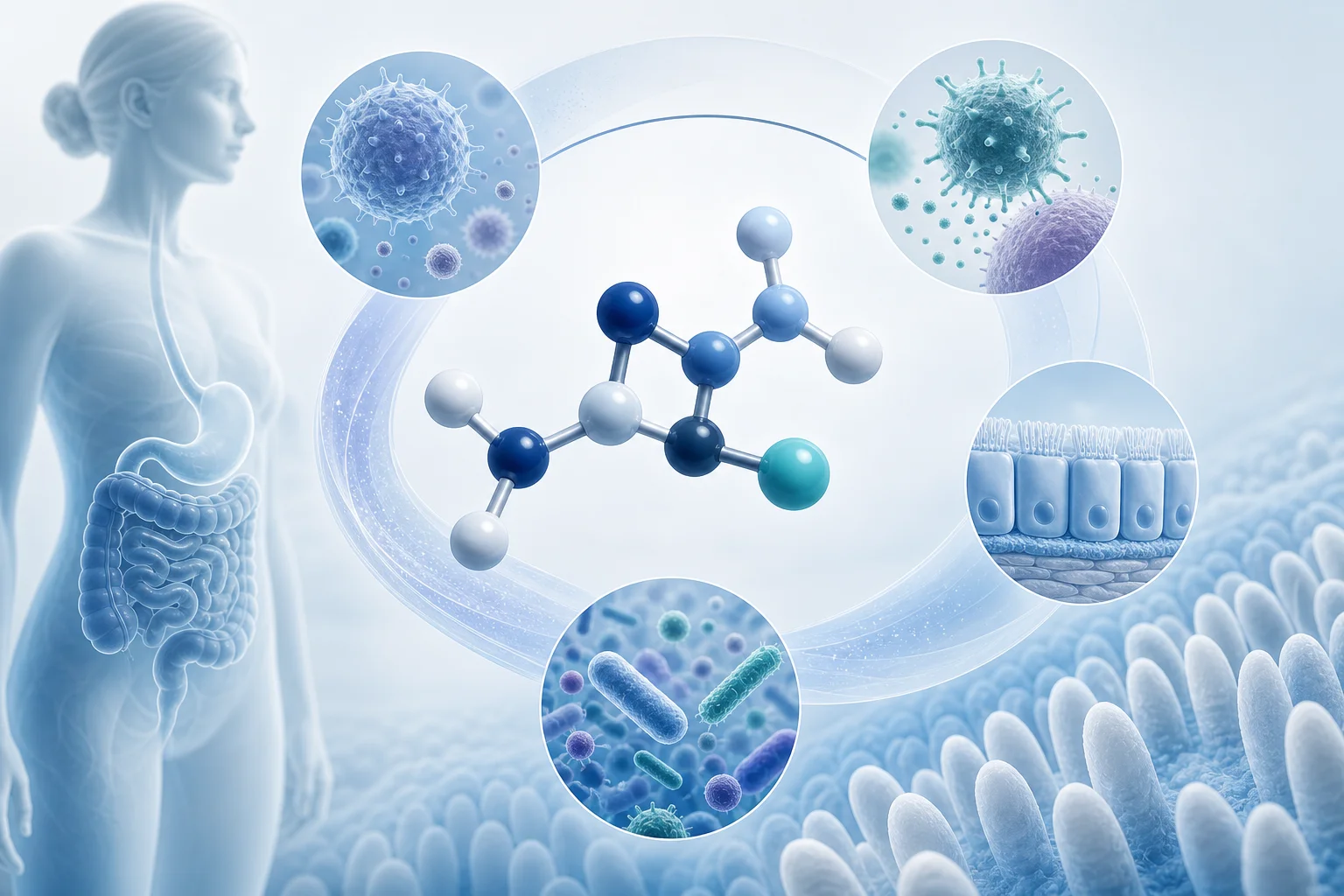
KPV is a tripeptide made of three amino acids: lysine, proline, and valine. It corresponds to the final three amino acids of α-MSH, or alpha-melanocyte-stimulating hormone, a peptide derived from the larger precursor POMC, or pro-opiomelanocortin.
Research interest in KPV developed from work on α-MSH and inflammation. Investigators identified that this short terminal fragment retained anti-inflammatory activity in several experimental models while being distinct from the broader hormonal and pigmentation-related functions associated with α-MSH.
How KPV Is Proposed to Influence Inflammatory Signaling
α-MSH is associated with melanocortin receptor signaling, but KPV does not appear to require melanocortin receptor activation to produce its reported anti-inflammatory effects. Instead, experimental work indicates that KPV can enter cells through peptide transport systems, particularly PepT1 transporters, and interact with inflammatory signaling pathways inside the cell.
A central proposed mechanism is suppression of NF-κB activation and nuclear translocation. NF-κB is a major regulator of inflammatory gene expression and can drive production of inflammatory mediators including TNF-α, IL-1β, IL-6, and IL-8. By limiting NF-κB signaling in experimental settings, KPV may reduce downstream inflammatory cytokine production.
KPV has been reported to reduce production of pro-inflammatory cytokines such as TNF-α, IL-1β, IL-6, and IL-8, while also being associated with increased anti-inflammatory signaling molecules in experimental contexts. This pattern is often described as inflammatory modulation rather than simple immune shutdown, although the clinical significance of that distinction remains uncertain.
Gut, Mucosal, and Epithelial Research
The strongest area of KPV research described in the available evidence is gut inflammation and colitis models. In animal studies, KPV has been associated with reduced colitis severity, reduced neutrophil infiltration, lower inflammatory cytokines, and improved mucosal healing. One experimental study reported an approximately 50% reduction in colon inflammation markers.
A possible reason for the gut focus is PepT1, a peptide transporter that may be upregulated in inflamed intestinal tissue. This transporter is proposed to facilitate KPV uptake into affected tissue, providing a mechanistic rationale for studying KPV in intestinal inflammation and epithelial barrier contexts.
Research discussions commonly connect this mechanism to inflammatory bowel disease models, gut barrier dysfunction, and mucosal healing. However, these areas should be interpreted as research directions rather than established clinical indications. Human evidence remains limited.
Skin, Wound, Pulmonary, and Systemic Inflammation Models
KPV has also been investigated in epithelial and tissue repair contexts beyond the gut. In a corneal injury model, treated corneas were reported to heal within 60 hours while untreated controls remained unhealed. Proposed contributors included reduced inflammation, nitric oxide signaling, epithelial regeneration, and collagen organization.
Dermatology-related interest includes inflammatory skin conditions such as psoriasis, eczema, dermatitis, acne, and rosacea. The mechanistic rationale is cytokine reduction and local inflammatory modulation, but the level of evidence varies and should not be treated as proof of clinical benefit.
Laboratory studies in pulmonary inflammation have reported suppression of IL-8, NF-κB activation, and airway inflammatory signaling. This has led to early research interest in asthma, viral lung injury, and ARDS-type inflammation, although clinical evidence in these areas remains early.
There is also emerging interest in autoimmune and systemic inflammatory contexts, including rheumatoid arthritis, mast-cell-driven inflammation, autoimmune disorders, and chronic inflammatory syndromes. These remain areas of exploratory or mechanistic interest rather than settled clinical applications.
Antimicrobial Activity and Immune Modulation
One notable feature of KPV research is reported antimicrobial activity. Experimental findings suggest that KPV can inhibit certain pathogens independently of white blood cells. This is unusual because many anti-inflammatory approaches are evaluated primarily for their ability to dampen immune signaling rather than for direct antimicrobial effects.
The relationship between KPV’s anti-inflammatory activity and antimicrobial effects is not yet fully established in human clinical contexts. The most cautious interpretation is that KPV may influence inflammatory signaling while also showing direct antimicrobial activity in experimental systems.
Evidence Strength and Remaining Uncertainty
| Research area | Current interpretation |
|---|---|
| Gut inflammation and colitis models | Most developed area; animal studies report reduced colitis severity, inflammatory cytokines, neutrophil infiltration, and improved mucosal healing. |
| NF-κB and cytokine signaling | Mechanistically central; experimental work supports effects on NF-κB activation and inflammatory cytokines such as TNF-α, IL-1β, IL-6, and IL-8. |
| Wound and epithelial healing | Moderate experimental support, including corneal injury findings and proposed effects on epithelial regeneration and collagen organization. |
| Dermatology and pulmonary inflammation | Mechanistically plausible and supported by laboratory findings, but clinical evidence remains limited or early. |
| Autoimmune and chronic systemic inflammation | Emerging research interest; human evidence remains limited. |
Overall, KPV is a compact α-MSH-derived peptide with a focused research profile around NF-κB suppression, cytokine modulation, epithelial inflammation, mucosal healing, and antimicrobial activity. Its most compelling evidence is in experimental gut inflammation and related mucosal models. The major limitation is translation: promising laboratory and animal findings do not establish clinical effectiveness, dosing, long-term safety, or appropriate use in humans.