Research Article
NAD+ as a Cellular Coenzyme: Energy Production, Repair Signaling, and Healthy Aging
An evidence-aware explanation of NAD+ as a core coenzyme involved in electron transfer, ATP generation, DNA repair enzymes, sirtuin activity, CD38-related NAD+ degradation, inflammation regulation, and circadian rhythm signaling. It helps readers separate established cellular biology from less certain claims about fatigue, cognition, recovery, and longevity outcomes.
NAD+ is a coenzyme, not a peptide
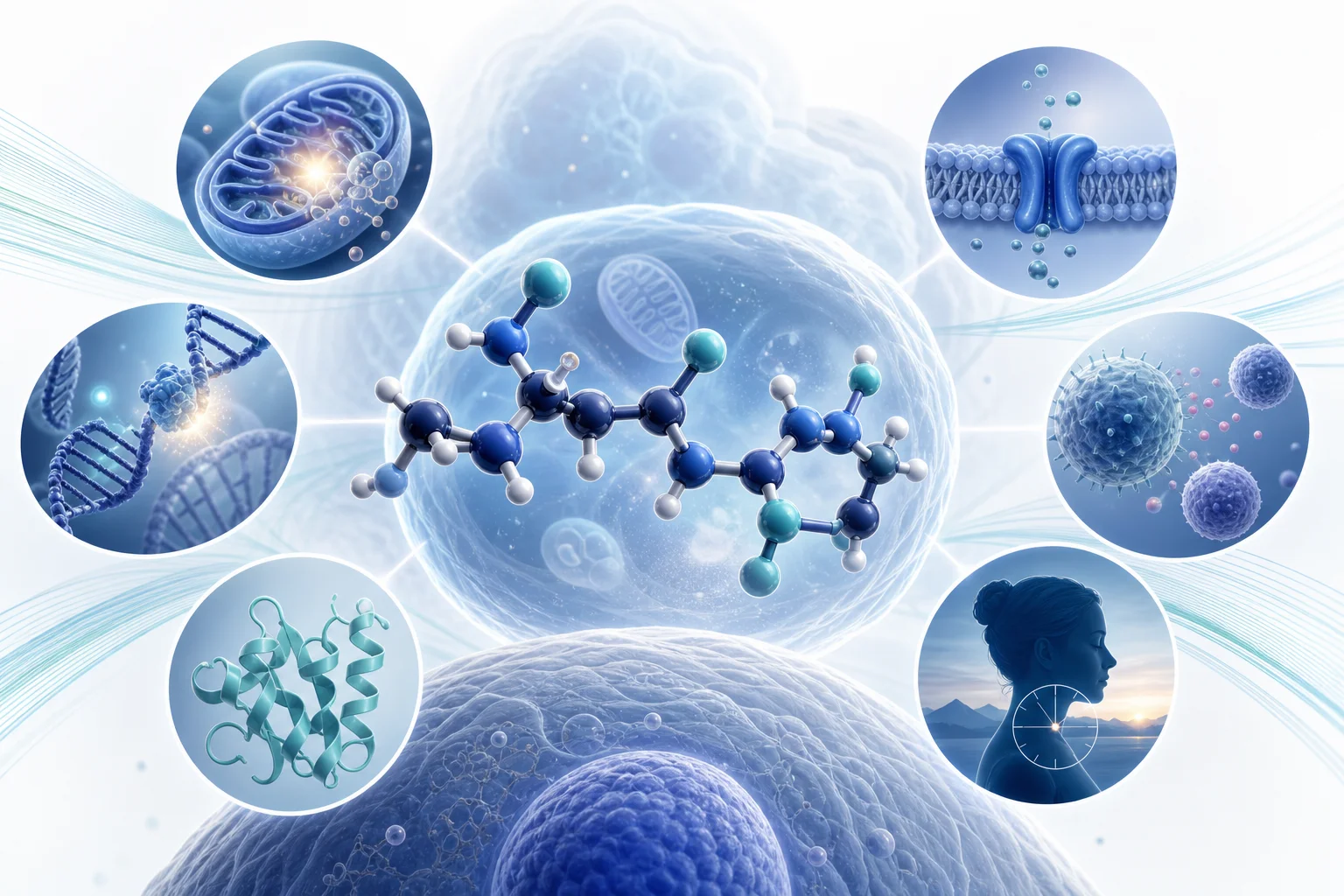
NAD+ is a core cellular coenzyme required for several fundamental biological processes, including energy production, DNA repair signaling, inflammation regulation, circadian rhythm signaling, and mitochondrial function. It is best understood as part of the cell’s operating chemistry rather than as a hormone-like peptide or a single-purpose supplement target.
At the most established level, NAD+ helps cells move electrons during nutrient breakdown. It cycles between NAD+ and NADH, allowing electrons to be shuttled through glycolysis, the Krebs cycle, and oxidative phosphorylation. This electron transfer is central to ATP generation, the cell’s main usable energy output.
How NAD+ supports cellular energy production
During nutrient metabolism, NAD+ accepts electrons and is converted into NADH. NADH then donates those electrons into the mitochondrial electron transport chain, helping produce ATP and regenerate NAD+. This reversible cycling is one reason NAD+ is closely linked with mitochondrial output and metabolic flexibility.
When NAD+ availability is low, the cell may have less capacity to support energy production and the activity of NAD+-dependent repair enzymes. This is a mechanistic statement about cellular biology, not proof that any single NAD+-raising strategy will reliably improve symptoms or performance in every person.
Repair signaling, sirtuins, and NAD+-consuming enzymes
NAD+ is not only involved in ATP production. It is also consumed by several enzyme systems that connect cellular metabolism with repair, stress response, immune signaling, and rhythm regulation.
| System or enzyme group | NAD+-linked role |
|---|---|
| Energy production | Supports electron transfer needed for mitochondrial ATP generation |
| PARP enzymes | Use NAD+ in DNA repair-related activity |
| Sirtuins, including SIRT1 and SIRT3 | Linked with mitochondrial efficiency, stress resistance, and gene expression |
| CD38 | Involved in immune signaling and NAD+ degradation |
| Circadian enzymes | Connected with metabolic rhythm control |
PARP enzymes use NAD+ in DNA repair processes. Sirtuins, including SIRT1 and SIRT3, are NAD+-dependent enzymes associated with mitochondrial efficiency, stress resistance, and gene expression. CD38 is relevant because it participates in immune signaling and contributes to NAD+ degradation. Circadian-related enzymes connect NAD+ biology with metabolic rhythm control.
NAD+ availability, aging, and cellular demand
NAD+ levels are described as declining with age and stress, with one cited presentation estimate noting an approximate 50% decline by age 50. This kind of age-associated decline is one reason NAD+ is discussed in healthy aging research and in conversations about fatigue, slower recovery, metabolic inefficiency, and cognitive dulling.
A practical interpretation is that NAD+ availability may matter most when cellular demand is high or availability is depleted. However, cellular energy, repair, and resilience also depend on broader physiology, including sleep, nutrition, training status, metabolic health, and other regulatory systems. NAD+ biology is important, but it is not an isolated master switch.
What NAD+ research can and cannot yet show
The strongest evidence is mechanistic: NAD+ is clearly required for electron transfer, mitochondrial ATP generation, DNA repair-related enzymes, and NAD+-dependent signaling pathways. Research also indicates that oral NAD+ precursors such as NR and NMN can raise NAD+ levels in many studies, with reported blood NAD+ increases in the approximate range of 40% to 100% with daily use.
The clinical evidence is less settled. NAD+ augmentation is being studied or used in contexts such as fatigue, cognitive decline or brain fog, athletic recovery, mitochondrial dysfunction, metabolic health, addiction recovery support, healthy aging, and neurodegenerative disease support. These uses vary in evidence strength, and improvements in measured outcomes are not consistent across studies.
Several limitations are important. Raising NAD+ does not guarantee improved insulin sensitivity. Some studies have found no improvement in insulin sensitivity, glucose metabolism, blood pressure, or muscle mitochondrial function despite successful NAD+ elevation. Direct cellular uptake of NAD+ is also complex, and a temporary rise in circulating NAD+ may not equal sustained intracellular NAD+ availability.
Some reported findings are encouraging but should be interpreted carefully. A cited IV NAD+ trial in healthy adults aged 30 to 55 used a short five-day intervention and reported improvement in six of eight cognitive tests with no adverse events. A chronic fatigue study cited for oral NADH reported significant improvement in 31% of patients compared with 8% with placebo over four weeks. These examples point to areas of interest, not broad proof of reliable benefit for all users or all NAD+-related approaches.
A balanced view of NAD+ and healthy aging
NAD+ sits at the intersection of energy metabolism, repair signaling, mitochondrial function, immune activity, and circadian regulation. That makes it highly relevant to healthy aging biology. The established science supports NAD+ as a critical coenzyme and cellular repair cofactor; the more uncertain question is how reliably NAD+-raising interventions translate into meaningful, durable human outcomes.
For readers evaluating NAD+ claims, the clearest distinction is between cellular necessity and clinical predictability. Cells require NAD+ for essential functions. NAD+ precursors can raise measured NAD+ levels in many studies. But outcomes such as fatigue reduction, cognitive clarity, athletic recovery, metabolic improvement, and longevity remain context-dependent and not uniformly demonstrated.