
Research Article
BPC-157 for Tendon, Ligament, Muscle, Bone, and Nerve Recovery: What the Evidence Can and Cannot Show
A focused review of BPC-157’s proposed role in musculoskeletal and peripheral nerve recovery, including tendons, ligaments, muscle strains, fracture healing, and neuropathy models. The article distinguishes animal and mechanistic evidence from limited human data and explains why structural monitoring and functional outcomes matter in injury-focused use.
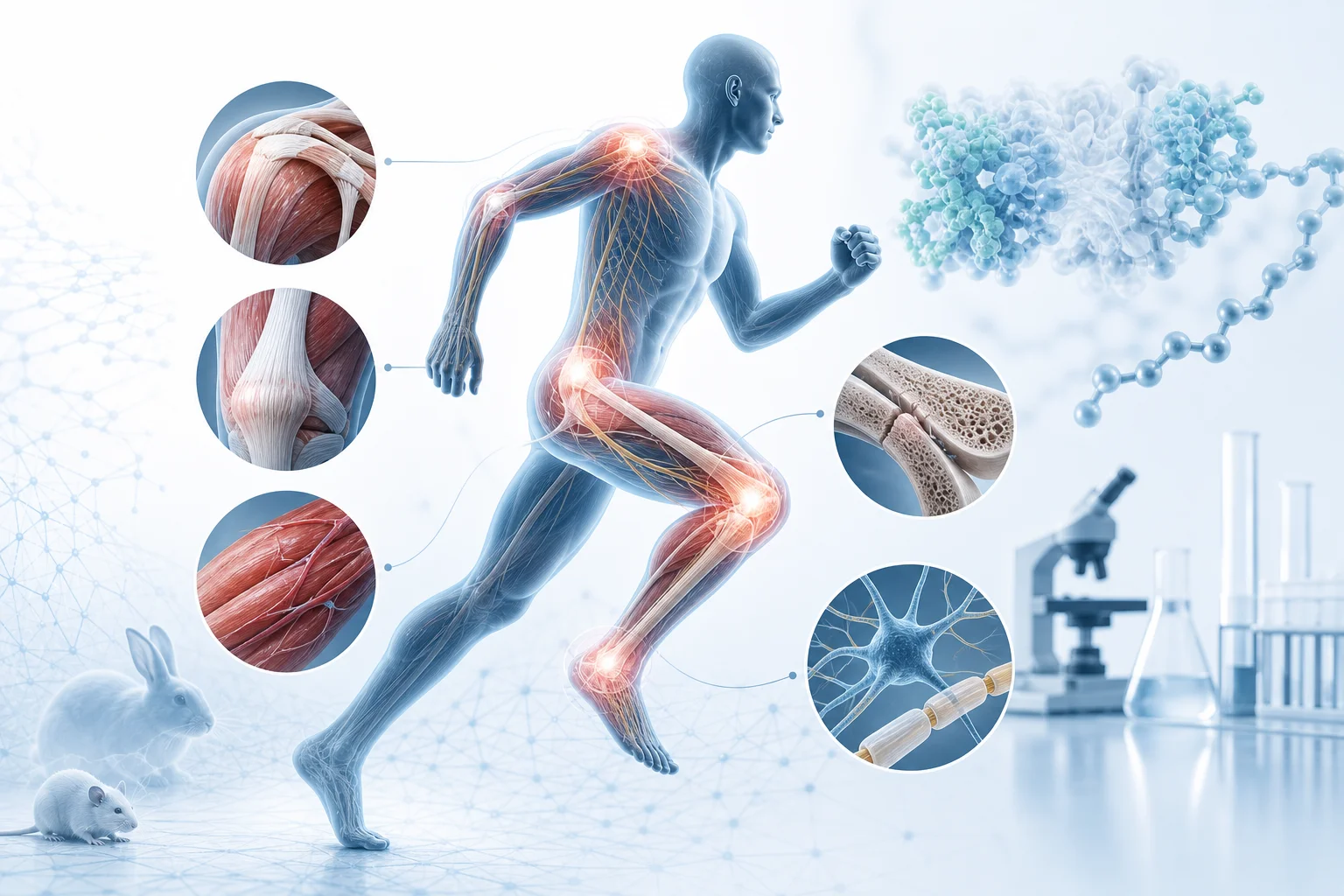
Why BPC-157 Is Studied in Injury Recovery
BPC-157, often expanded as Body Protection Compound-157, is a peptide that has attracted interest because preclinical research has reported activity across several tissue types involved in repair. In injury-focused discussions, the most relevant areas are tendons, ligaments, skeletal muscle, bone, and peripheral nerves.
The central scientific question is not whether BPC-157 is a general performance enhancer or anabolic compound. The more specific question is whether it can influence biological conditions associated with healing, such as blood vessel formation, nitric oxide signaling, cell migration, collagen deposition, and growth-factor responsiveness.
Mechanisms Relevant to Connective Tissue Repair
BPC-157 is usually discussed as a multi-pathway repair compound rather than as a peptide with one dominant receptor target. That distinction matters because tendon, ligament, muscle, bone, and nerve recovery are not single-step processes. They require vascular response, inflammatory regulation, cell recruitment, extracellular matrix remodeling, and restoration of function over time.
Nitric oxide regulation and vascular signaling
One proposed mechanism involves nitric oxide regulation. Rather than simply acting like a nitric oxide booster, BPC-157 has been described as appearing to normalize nitric oxide signaling. Mechanistic discussions include eNOS, VEGFR2, and Src kinase pathways, all of which are relevant to vascular function and repair signaling.
Angiogenesis and tissue blood supply
Angiogenesis, the formation of new blood vessels, is a recurring theme in BPC-157 research discussions. VEGF-related signaling, capillary formation, improved blood supply, and nutrient delivery are all relevant to injured connective tissues. This is especially important for tendons, which often heal slowly in part because of limited vascularity.
Related products
Related Stonehaven Insights
Research Article
BPC-157 Mechanisms: Tissue Repair, Nitric Oxide Signaling, Angiogenesis, and Human Evidence Limits
Research Article
Oral BPC-157 and Gut Barrier Repair: Tight Junctions, NSAID Injury, IBD Models, and Ulcer Research
Educational Guide